
Most Common Causes of Truck Accidents in Georgia
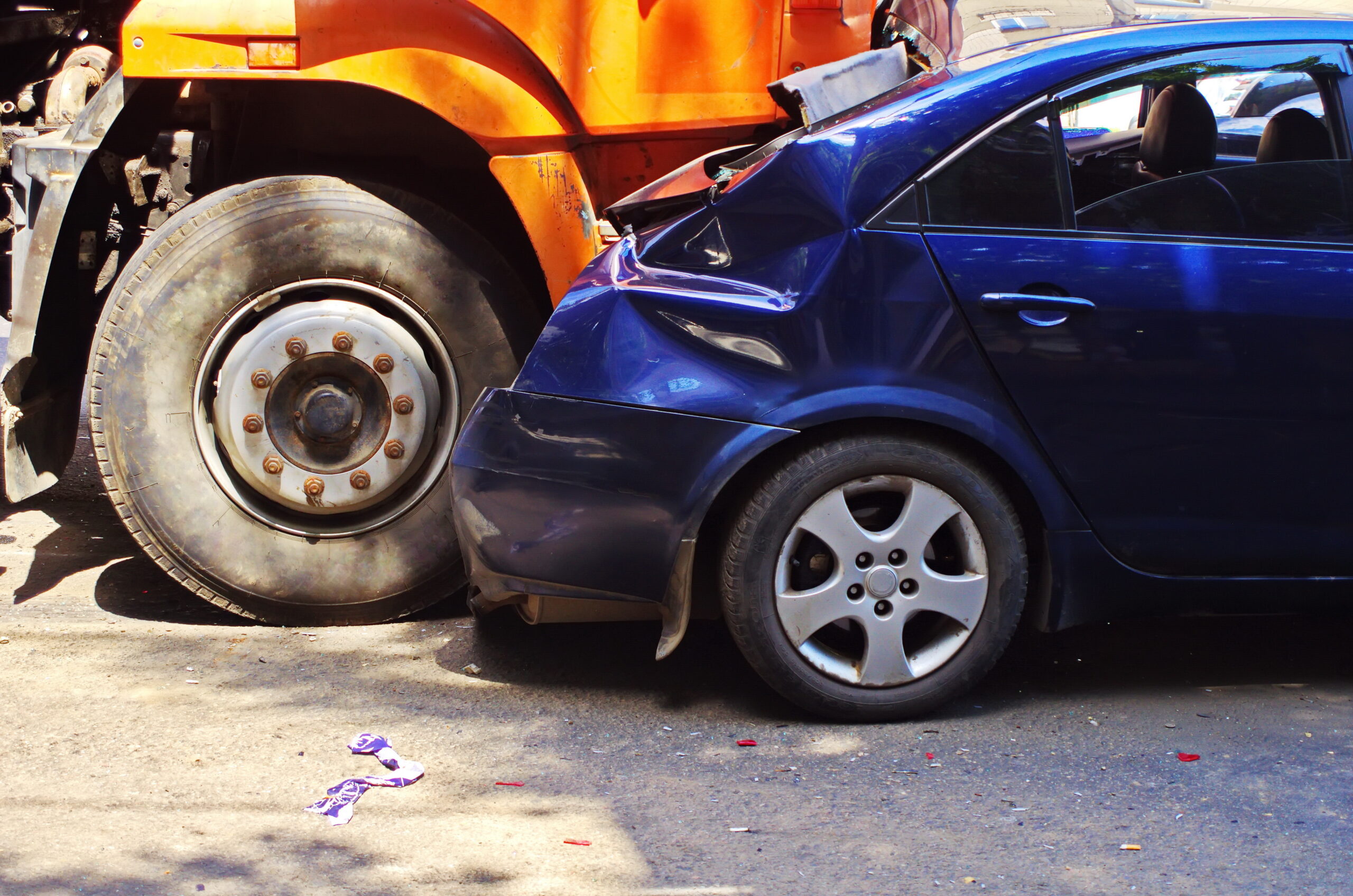
Every year, thousands of people across Georgia are injured or killed in crashes involving commercial trucks. According to the Governor’s Office of Highway Safety, large trucks are involved in a fairly sizable share of fatal highway crashes (14% in 2021), and the consequences for everyone involved are often devastating. (GOHS)
For drivers, passengers, and even truck drivers, it’s critical to understand what can cause these types of accidents to better protect personal safety and legal rights.
At Buzzell, Welsh & Hill, we represent accident victims throughout Georgia. Our team understands the unique legal complexities that truck accident cases present, and we’re here to help you navigate them.
Why Truck Accidents Are Especially Dangerous
Commercial trucks can weigh up to 80,000 pounds when fully loaded—that’s roughly 20 times the weight of a typical passenger car. At highway speeds between 60 and 80 miles per hour, the force of impact in a collision with a vehicle of such a size is immense. Oftentimes, survivors face catastrophic injuries, including traumatic brain injuries, spinal cord damage, broken bones, and internal injuries, which frequently require long-term care. Understanding why these crashes happen is essential to understanding who should be held responsible.
Common Causes of Truck Accidents in Georgia
1. Driver Fatigue
Truck driver fatigue is one of the leading causes of serious commercial vehicle accidents nationwide. The Federal Motor Carrier Safety Administration (FMCSA) has established Hours of Service (HOS) regulations that limit how long a driver can operate without rest, but violations are common. Drivers are often under pressure to meet tight delivery deadlines, and some carriers look the other way when the logbook shows that a driver exceeded their allotted operating time.
Why Does Fatigue Behind the Wheel Matter in a Trucking Accident Case?
A fatigued driver reacts more slowly to other cars on the road, exercises impaired judgment, and in severe cases, experiences microsleep—brief involuntary episodes of sleep that can cause a fully loaded truck to travel hundreds of feet without a conscious driver in charge. One surprise action from another driver, or one fatigue-impacted action by the truck driver, and the results could mean a life-altering collision.
2. Distracted Driving
Distracted driving is dangerous in any vehicle, but the risks are amplified when a commercial truck driver is distracted. Texting, adjusting GPS devices, eating, or interacting with in-cab technology can take a driver’s eyes and attention off the road at a critical moment.
Why Does Distracted Driving Matter in a Trucking Accident Case?
Georgia law prohibits handheld cell phone use while driving, and federal regulations place additional restrictions on commercial drivers. Despite these rules, distracted truck driving remains a persistent problem. When a truck driver is distracted, their ability to respond to sudden changes in traffic is severely compromised, which can lead to a major wreck.
3. Improper Truck Maintenance
Commercial trucks travel hundreds of thousands of miles over their lifetimes and require rigorous, regular maintenance to operate safely. Federal regulations require carriers to conduct pre-trip and post-trip inspections and maintain detailed maintenance records. When those responsibilities are ignored, the results can be catastrophic.
Why Does Truck Maintenance Matter in a Trucking Accident Case?
Brake failures are among the most dangerous maintenance-related issues. A truck that cannot stop in time, especially on Georgia’s hilly terrain or in heavy traffic, poses an extreme risk to everyone on the road. Tire blowouts, steering failures, faulty lighting, and defective coupling systems are other common maintenance failures that lead to serious accidents. Liability in these cases may rest with the trucking company, a third-party maintenance contractor, or even the truck or parts manufacturer.
4. Improper Cargo Loading
The way a truck’s cargo is loaded and secured has a direct impact on how the vehicle handles. Overloaded trucks put excessive stress on brakes and tires. Improperly balanced loads can cause a truck to become unstable, especially during turns or sudden lane changes. Unsecured cargo can shift mid-route, causing the driver to lose control and possibly spill onto the highway and/or strike other vehicles.
Why Does Cargo Loading Matter in a Trucking Accident Case?
Cargo loading is often handled by a shipper or third-party logistics company, not the driver. This means the party responsible for a loading-related accident may be entirely separate from the carrier. Identifying and holding all responsible parties accountable is a critical part of building a strong truck accident case.
5. Bad Weather or Road Conditions
From summer thunderstorms and dense fog to the occasional ice storm, Georgia’s climate can create challenging driving conditions. Commercial truck drivers are expected to adjust their speed and following distance for weather and road conditions and to pull over when conditions become too dangerous to continue safely.
Why Do Weather and Road Conditions Matter in a Trucking Accident Case?
When a trucking company pressures drivers to keep moving despite dangerous weather, or when a driver fails to take appropriate precautions, they may bear liability for a resulting accident. Road conditions, such as construction zones, potholes, and poorly marked lanes, can also contribute. In some cases, a government entity responsible for road maintenance may even share liability.
6. Poor Training and Employer Negligence
Operating an 80,000-pound commercial vehicle is a highly skilled task. Trucking companies have a legal duty to properly hire, train, and supervise their drivers. When a carrier cuts corners by hiring drivers without verifying their commercial driver’s license (CDL), skipping safety training, or retaining a driver with a history of violations, they open the door to serious accidents and significant legal liability.
Why Does Training and Employer Negligence Matter in a Trucking Accident Case?
Employer negligence in the trucking industry can take many forms, including unrealistic scheduling that forces drivers to violate HOS rules, inadequate drug and alcohol testing, failure to act on known safety issues, or pressure to skip required inspections. Under Georgia law and federal regulations, trucking companies can be held directly liable for these failures.
Who Can Be Held Liable for a Trucking Accident?
One of the most important things to understand about truck accident cases is that, based on the cause of the accident, multiple parties may share responsibility. Potentially liable parties include:
- The truck driver for negligent operation
- The trucking company for negligent hiring, training, scheduling, or supervision
- The cargo shipper or loader for improper loading or overloading
- A maintenance company for negligent repairs or inspections
- A truck or parts manufacturer for defective components
- A government entity for hazardous road conditions
Identifying every liable party is essential to maximizing your recovery. At Buzzell, Welsh & Hill, we conduct thorough investigations to understand the details of the accident and hold responsible parties accountable for their negligence.
After a trucking accident, don’t wait! Schedule a consultation with a skilled trucking accident attorney at Buzzell, Welsh & Hill about your case today: 478-217-2072
Truck Accidents and Personal Injury Claims in Georgia
If you were injured in a truck accident as a motorist, cyclist, pedestrian, or passenger, it’s crucial to file a personal injury claim to recover the compensation you deserve.
Georgia operates under a modified comparative fault system, meaning you can recover damages as long as you are less than 50% at fault for the accident. Your total recovery is reduced by your percentage of fault. For example, if you are found to be 10% at fault and your damages total $500,000, you would recover $450,000.
Damages in a Georgia truck accident personal injury claim can include:
- Medical expenses (past and future)
- Lost wages and reduced earning capacity
- Pain and suffering
- Emotional distress
- Loss of enjoyment of life
- Wrongful death damages for surviving family members should the accident lead to fatalities
Because the trucking industry is heavily insured and carriers typically have legal teams working to minimize payouts, having experienced legal representation is critical. The truck accident lawyers at Buzzell, Welsh & Hill work diligently to level the playing field for injured victims and their families.
Truck Accidents and Workers’ Compensation in Georgia
If you were injured in a truck accident while on the job, whether as a truck driver, a warehouse worker, a delivery employee, or in any other work capacity, you may have a workers’ compensation claim in addition to other legal options.
Georgia’s workers’ compensation system provides benefits to employees who are injured in the course and scope of their employment, regardless of who was at fault. This can include coverage for medical treatment, temporary or permanent disability benefits, and a portion of lost wages.
However, workers’ compensation benefits alone often fall short of fully compensating an injured worker for the full scope of their losses. If a third party, such as another trucking company, a negligent driver, or a defective equipment manufacturer, contributed to the accident, you may also be able to pursue a separate personal injury claim. This is known as a “third-party claim,” and it can significantly impact your total recovery.
Navigating both a workers’ compensation claim and a third-party personal injury claim simultaneously is complex. At Buzzell, Welsh & Hill, our team handles both, ensuring your rights are fully protected on every front.
How a Truck Accident Attorney Investigates the Cause of a Truck Accident
Determining the true cause or causes of a truck accident often requires swift action and thorough investigation. Evidence in truck accident cases can disappear quickly. Electronic logging device (ELD) data, black box recordings, and surveillance footage may be overwritten within days. That’s why it’s important to contact an attorney as soon as possible after an accident.
A thorough truck accident investigation typically involves:
- Preserving and analyzing black box (ECM) data, which records speed, braking, and other vehicle data in the moments before impact
- Reviewing driver logs and HOS records to identify fatigue or logbook falsification
- Obtaining the driver’s personnel file to uncover hiring red flags, training gaps, or prior violations
- Inspecting the truck and cargo for maintenance deficiencies, overloading, or improper securement
- Collecting police reports, photos, and witness statements
- Consulting accident reconstruction experts to establish exactly how the crash occurred
- Requiring companies to hand over carrier records, including maintenance logs, dispatch communications, and drug testing records
- Investigating all potentially liable parties to ensure full accountability
At Buzzell, Welsh & Hill, we move quickly to preserve critical evidence and build the strongest possible case on your behalf.
Frequently Asked Questions About Truck Accidents in Georgia
What should I do immediately after a truck accident in Georgia?
If you’re ever in a truck accident, seek medical attention first, even if you feel okay, as some injuries aren’t immediately apparent. Also, be sure the police are called to document the scene. Gather contact and insurance information from all parties, photograph the scene if it’s safe to do so, and contact an attorney before speaking with any insurance company.
How long do I have to file a truck accident claim in Georgia?
For personal injury claims, Georgia’s statute of limitations is generally two years from the date of the accident. For workers’ compensation claims, you must report the injury to your employer within 30 days and file a claim within one year. Acting promptly protects your rights and preserves critical evidence.
Can I sue the trucking company directly?
Yes. Under the legal doctrine of respondeat superior (a doctrine that holds employers liable for the negligent acts of their employees), a trucking company can be held liable for a driver’s acts and behaviors if they resulted in a trucking accident. Companies can also be held directly liable for their own negligence in hiring, training, or supervising drivers, or for failing to maintain their fleet.
What if I were partially at fault for the truck accident?
Georgia’s modified comparative fault rule means you can still recover damages as long as you are less than 50% at fault. Your recovery is reduced proportionally by your share of fault. An attorney can help ensure your fault percentage is not overstated by the other side.
Can a truck driver file a workers’ comp claim and a personal injury lawsuit?
Potentially, yes. If the truck driver was an employee injured on the job, they may have a workers’ compensation claim. If a third party, like another driver, a manufacturer of defective equipment, or a negligent shipper, contributed to the accident, a separate personal injury (third-party) claim may also be available. The attorneys at Buzzell, Welsh & Hill handle both.
How much does it cost to hire a truck accident attorney?
We handle truck accident cases on a contingency fee basis, which means you pay nothing up front. We only get paid if we recover compensation for you.
Contact Buzzell, Welsh & Hill After a Georgia Truck Accident for Strong Representation: 478-217-2072
Truck accident cases are among the most complex in personal injury and workers’ compensation law. The stakes are high, the liable parties are often well-defended, and the evidence can disappear fast. You need a team that knows how to act quickly, investigate thoroughly, and fight hard for the compensation you deserve.
Whether you’re a worker injured on the job or a victim of a negligent truck driver, Buzzell, Welsh & Hill is ready to help you recover the compensation you deserve.
Contact us today for a free consultation: 478-217-2072
Related Articles
- Fatal Truck Accidents in Georgia: What Families Need to Know
- Do I Need a Car Accident Lawyer After a Wreck?
- How to Handle a Car Accident Injury in Georgia
- What Is Considered Distracted Driving
Recent Success Stories
- How BWH Protected a Truck Driver’s Dependents and His Dignity
- How A Semi-Truck Accident on I-16 Led to a Fight for Justice
- BWH Put Up a Long Fight for Dependency Benefits
- How BWH Got Insurance to Pay for a Wreck-Related Injury
