
Who Can Be Held Liable in a Georgia Truck Accident?
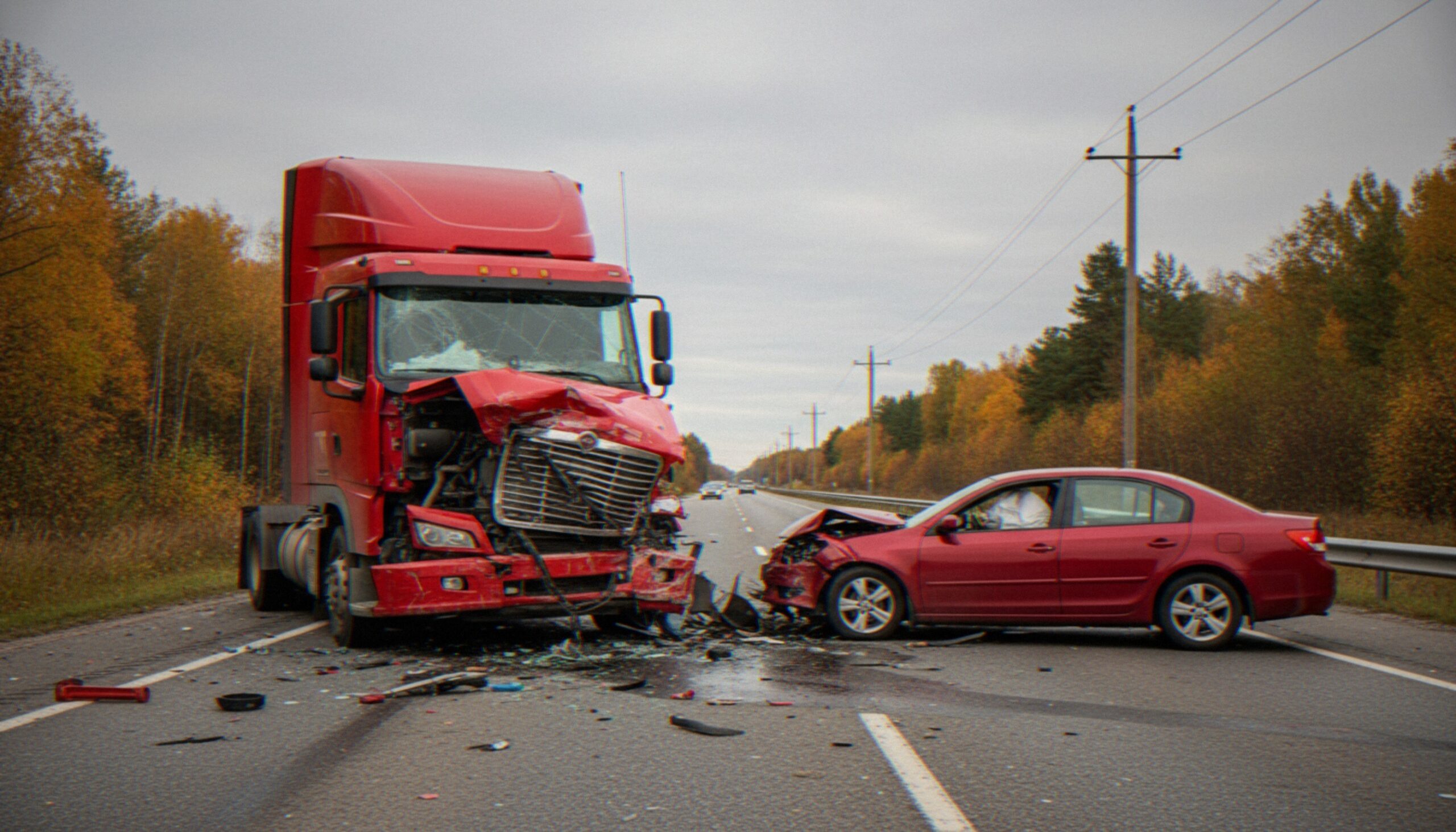
When a commercial truck collides with a passenger vehicle, the consequences are usually severe. Because of the sheer size and weight of an 18-wheeler, semi-truck, tractor-trailer or any commercial truck, it’s the smaller vehicle that will bear the brunt of the impact. If you or someone you love has been injured or killed in a truck accident, one of the first questions you’re likely asking is: Who is responsible for this?
The answer is often more complicated than it seems. Unlike a typical car accident, where liability usually falls on one of the two drivers, a truck accident may involve multiple parties, each with their own share of fault.
Understanding who is liable is the first step toward protecting your legal rights and pursuing the compensation you deserve.
The Parties That Can Be Held Responsible for a Truck Accident
1. The Truck Driver
The driver of any commercial truck is often the most obvious starting point in any truck accident investigation. Commercial drivers are held to a higher standard than regular motorists, as they must hold a Commercial Driver’s License (CDL), follow strict Hours of Service (HOS) regulations set by the Federal Motor Carrier Safety Administration (FMCSA), and comply with rules about load securement, speed, and road safety.
A truck driver may be liable if they:
- Were driving while fatigued—Federal regulations cap how many hours a commercial driver can operate without rest. However, log falsification and pressure from dispatchers push many drivers beyond safe limits. Drowsy driving is one of the leading causes of commercial truck accidents nationwide.
- Were under the influence—Commercial drivers are held to a lower blood alcohol content (BAC) threshold: 0.04% compared to the standard 0.08%. Any impairment from alcohol, prescription drugs, or illegal substances can form the basis of a claim.
- Were distracted—Texting, using a dispatch device, or eating behind the wheel of a massive commercial vehicle creates serious risk for everyone on the road.
- Violated traffic laws—Speeding, improper lane changes, and failure to yield are common driver errors that contribute to truck accidents.
Driver records, electronic logging device (ELD) data, toxicology reports, and cell phone records are all critical pieces of evidence when evaluating driver liability.
2. The Trucking Company
In many truck accident cases, the employing trucking company carries as much (or more) liability than the driver. Under Georgia law, an employer can be held responsible for the negligent acts of its employees while they are performing job duties. But trucking company liability often extends beyond that.
A trucking company may be held liable for:
- Negligent hiring or retention—If a company hired a driver with a history of DUIs, safety violations, or a suspended CDL, they may be directly responsible for putting a dangerous person behind the wheel.
- Inadequate training—Failing to properly train drivers on safe operating procedures, HOS rules, or how to handle hazardous conditions can make the company liable for resulting crashes.
- Pressure to violate safety regulations—Some carriers push drivers to exceed hours-of-service limits or skip required inspections to meet tight delivery deadlines. However, this practice endangers everyone on the road.
- Negligent supervision—Companies have a duty to monitor driver behavior and enforce compliance with federal and state trucking regulations. Those who do not uphold this duty put everyone at risk.
It’s also worth noting that some trucking companies classify drivers as independent contractors rather than employees to limit liability. An experienced truck accident attorney will investigate the true nature of the working relationship to ensure the company cannot simply sidestep responsibility.
3. Maintenance Providers
Commercial trucks require rigorous, regular maintenance. Brake failures, tire blowouts, and steering malfunctions are among the most common mechanical causes of truck accidents. When they result from poor maintenance, a third-party repair or maintenance company may sometimes bear responsibility.
Federal regulations require carriers to systematically inspect, repair, and maintain their vehicles. When those duties are outsourced, maintenance providers must meet the same standards. A maintenance company can be held liable if:
- Brake components were improperly installed or not replaced when worn
- Tire degradation was ignored, or tires were not replaced at appropriate intervals
- Mechanical defects that could have been caught during routine inspection were overlooked
- Negligent repairs introduced new hazards that directly caused or contributed to a crash
Evidence in these cases typically includes maintenance logs, inspection records, and a post-accident analysis of the vehicle’s mechanical condition.
4. Cargo Loaders
An improperly loaded or unsecured cargo load is a dangerous and often overlooked cause of truck accidents. When freight shifts unexpectedly, it can cause a driver to lose control, contribute to a rollover, or send debris flying into oncoming traffic.
Federal regulations govern how cargo must be loaded, distributed, and secured. When those rules are violated, the company or individuals responsible for loading the truck may be held liable. Common cargo-related issues include:
- Overloading the vehicle beyond its legal weight limit
- Failing to secure cargo properly with appropriate restraints
- Uneven weight distribution that affects vehicle handling and braking
- Loading hazardous materials without following the required safety protocols
In some cases, the trucking company handles its own loading and can be held directly accountable. In others, a separate third-party logistics or warehousing company may bear responsibility.
5. Truck Manufacturers
Not every truck accident is caused by human error. Sometimes, a defect in the truck itself or one of its components can be to blame. In these situations, the vehicle manufacturer or the manufacturer of the defective part may be held liable under product liability law.
Manufacturer liability may apply when:
- A faulty braking system fails to function properly, even when properly maintained
- Defective tires blow out under normal operating conditions
- Steering or suspension components fail without warning
- A known defect is not addressed through a timely recall
These cases often require accident reconstruction experts and engineers who can examine the vehicle and trace the defect to its origin. Product liability claims can be filed against the vehicle manufacturer, component manufacturers, or distributors, depending on where the defect was introduced.
Have you been hurt in a trucking accident in Middle Georgia? The attorneys at Buzzell, Welsh & Hill are ready to fight to get you the compensation you deserve. Call 478-217-2072 for your FREE consultation.
Modified Comparative Negligence in Georgia Truck Accident Cases
One important aspect of Georgia law that every truck accident victim in our state should understand is the modified comparative negligence rule. According to Georgia law, you can still recover compensation even if you were partially at fault for the accident, but there are conditions:
- If you are found to be less than 50% at fault, you can recover damages, but your percentage of fault will reduce your compensation. For example, if you are 20% at fault and your total damages are $500,000, you would recover $400,000.
- If you are found to be 50% or more at fault, you cannot recover any compensation under Georgia law.
This rule matters because insurance companies and defense attorneys for trucking companies will often try to shift as much blame as possible onto the injured victim. They may argue that the victim was speeding, following too closely, or distracted at the time of the crash. They will use all evidence possible to reduce or eliminate their client’s liability.
Having a knowledgeable attorney on your side to combat their argument is essential. An attorney will work to counter these tactics, preserve key evidence, and build the strongest possible case for you.
How Your BWH Attorney Investigates to Determine Responsibility
Truck accident cases are not investigated the same way that a standard car accident claim is. The evidence is more complex and technical. Plus, evidence can disappear quickly.
Here’s what a thorough investigation by your BWH truck accident attorney typically involves:
Preserving and Obtaining Evidence
Your attorney will immediately send an evidence preservation letter (also known as a spoliation letter) to the trucking company, demanding that they preserve the truck’s black box (Electronic Control Module), ELD data, dashcam footage, driver logs, and maintenance records before they are overwritten or destroyed.
Analyzing the Truck’s Data
The truck’s ECM records speed, braking, engine activity, and other operational data in the moments leading up to a crash. This information can be decisive in establishing exactly what happened and who caused it.
Reviewing the Driver’s Background
A full review of the driver’s employment history, CDL records, prior violations, drug and alcohol testing history, and training records can reveal a pattern of negligence that the trucking company knew about or should have known about.
Examining Maintenance and Inspection Records
A complete maintenance history of the vehicle can reveal whether required inspections were skipped, whether known mechanical problems went unaddressed, and whether any third-party providers share responsibility.
Accident Reconstruction
Your attorney may work with accident reconstruction specialists who analyze skid marks, road conditions, vehicle damage, and witness accounts to establish how the crash occurred.
Identifying All Liable Parties
Perhaps most importantly, our skilled truck accident attorneys know how to identify every potentially liable party, not just the most obvious one. This matters because it affects the total amount of compensation available to you and ensures no responsible party escapes accountability.
Injured in a Georgia Truck Accident? Buzzell, Welsh & Hill Is Ready to Fight for You: 478-217-2072
Truck accident cases demand immediate action, deep investigative resources, and attorneys who understand the full scope of commercial vehicle law. At Buzzell, Welsh & Hill, we represent truck accident victims throughout Georgia, including those in Macon and across the Middle Georgia region, and we fight to hold every responsible party fully accountable.
We know the tactics trucking companies and their insurers use to minimize or deny claims. We know how to counter them. And we know what it takes to build a case that delivers meaningful results for the people we represent.
If you were injured or a loved one was killed in a truck accident, don’t wait. Evidence fades, deadlines approach, and the other side is already working to protect their interests. Let us protect yours.
Call Buzzell, Welsh & Hill today to schedule your free consultation. There is no cost to speak with us, and no fee unless we win your case. 478-217-2072.
Frequently Asked Questions About Georgia Truck Accident Liability
Q: Can I sue both the truck driver and the trucking company?
Yes. In many cases, both the driver and the employing company can be named as defendants. Georgia law allows you to pursue all liable parties simultaneously, and your attorney will determine the appropriate defendants based on the facts of your case.
Q: What if the truck driver was classified as an independent contractor?
The trucking company may still be liable even if the driver was labeled an independent contractor. Courts look at the level of control the company had over the driver’s work. If the company controlled how, when, and where the driver operated, contractor status may not shield them from liability.
Q: How long do I have to file a truck accident lawsuit in Georgia?
Georgia’s statute of limitations for personal injury claims is generally two years from the date of the accident. However, exceptions apply, and certain claims, such as those involving government entities, may have shorter deadlines. Contact an attorney as soon as possible after a truck accident to protect evidence and your rights.
Q: What damages can I recover after a truck accident?
Victims may be entitled to compensation for medical expenses (past and future), lost wages, reduced earning capacity, pain and suffering, emotional distress, property damage, and, in cases of gross negligence or recklessness, punitive damages (damages intended to punish wrongdoers for their behavior in an attempt to keep them from behaving similarly in the future).
Q: What should I do immediately after a truck accident?
If you are physically able, call 911, seek medical attention, document the scene with photos, and collect contact and insurance information. Avoid making statements about fault to anyone at the scene or to the trucking company’s insurer. Contact a truck accident attorney before giving any recorded statements.
Q: Why are truck accident cases more complicated than regular car accident claims?
Truck accident cases involve federal regulations, multiple potentially liable parties, large corporate defendants with experienced legal teams, and highly technical evidence. They require an attorney with specific experience in commercial vehicle litigation, not just general personal injury work.
Related Articles
- Most Common Causes of Truck Accidents in Georgia
- Fatal Truck Accidents in Georgia: What Families Need to Know
- Do I Need a Car Accident Lawyer After a Wreck?
- How to Handle a Car Accident Injury in Georgia
Recent Success Stories
- How BWH Protected a Truck Driver’s Dependents and His Dignity
- How A Semi-Truck Accident on I-16 Led to a Fight for Justice
- BWH Put Up a Long Fight for Dependency Benefits
- How BWH Got Insurance to Pay for a Wreck-Related Injury
